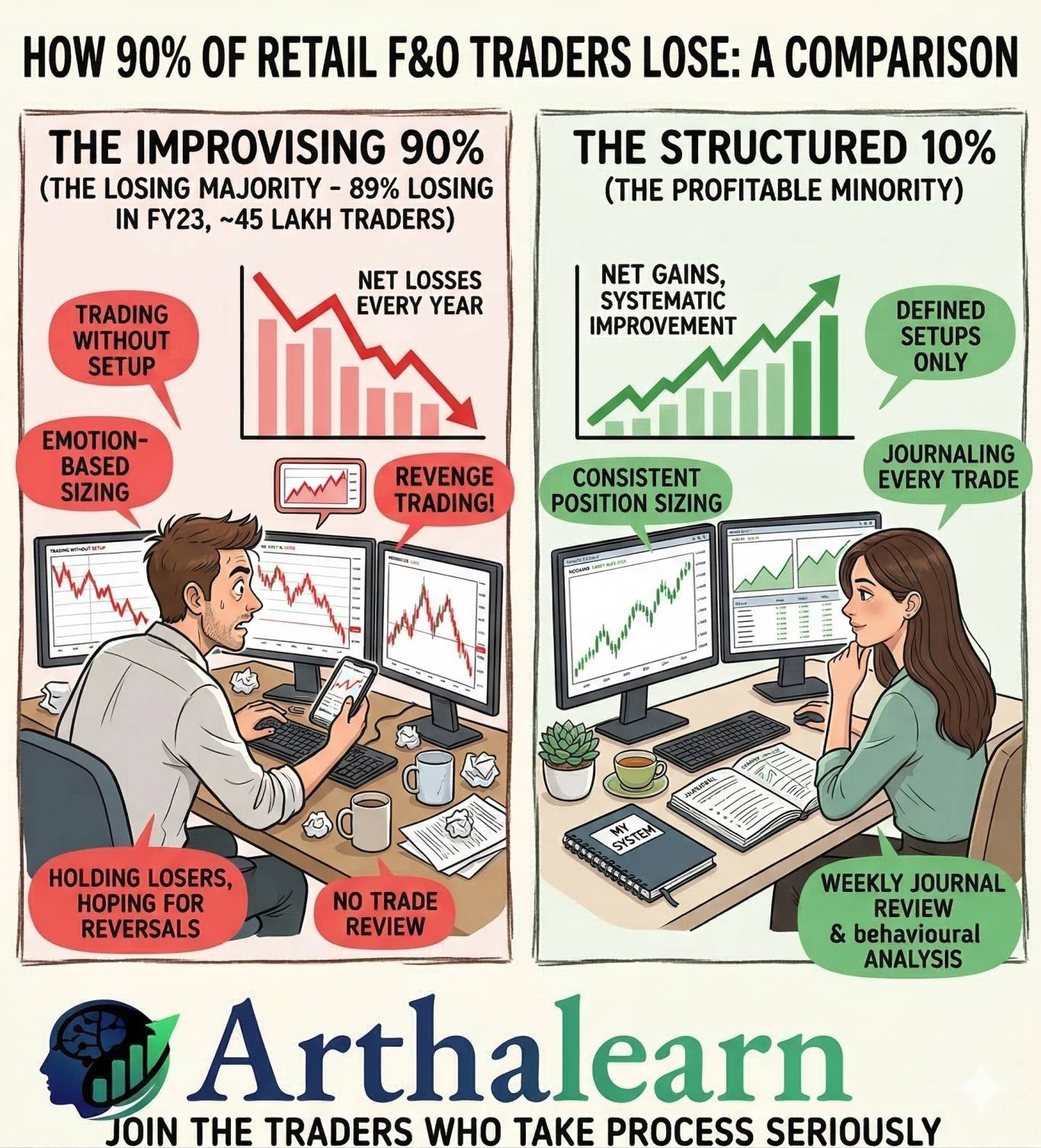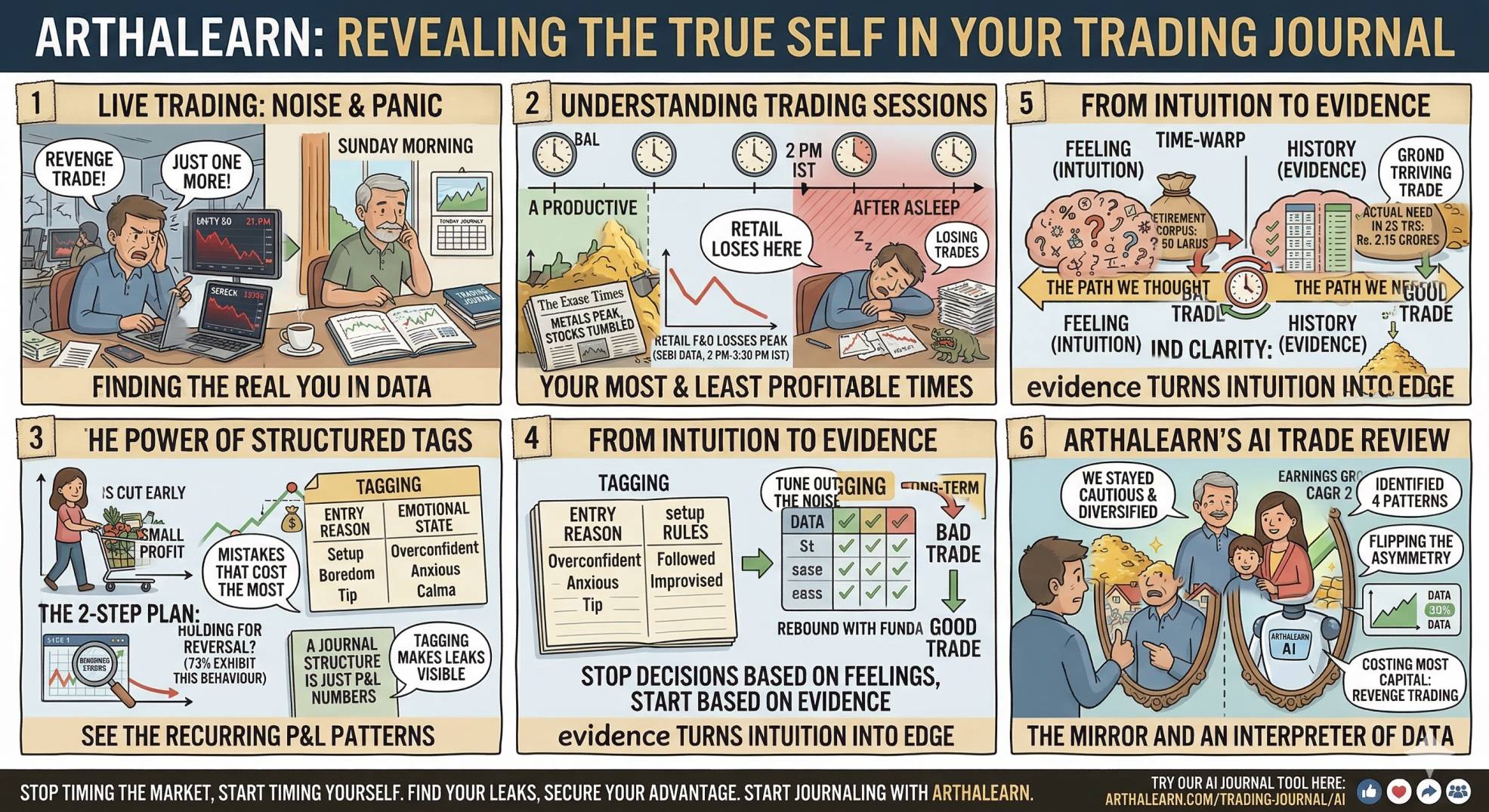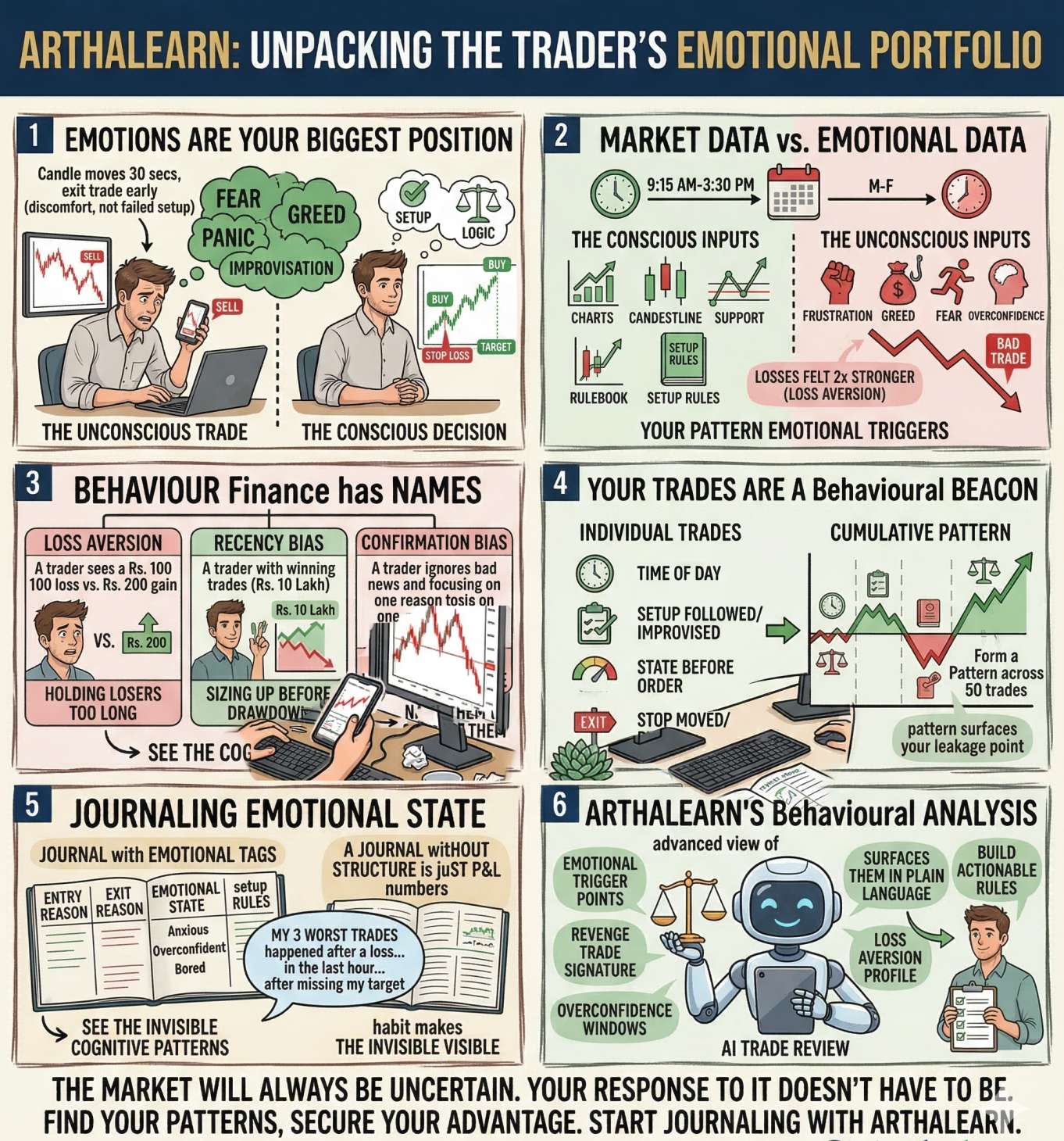
Emotions Are Your Biggest Position
Your setup is only half the trade. The other half is the emotional state you bring to it. Here is what behavioural finance says about why retail traders lose and how awareness changes the outcome.

Your biggest position in the market is not a stock — it is your emotional state. Master your emotions and the P&L follows.
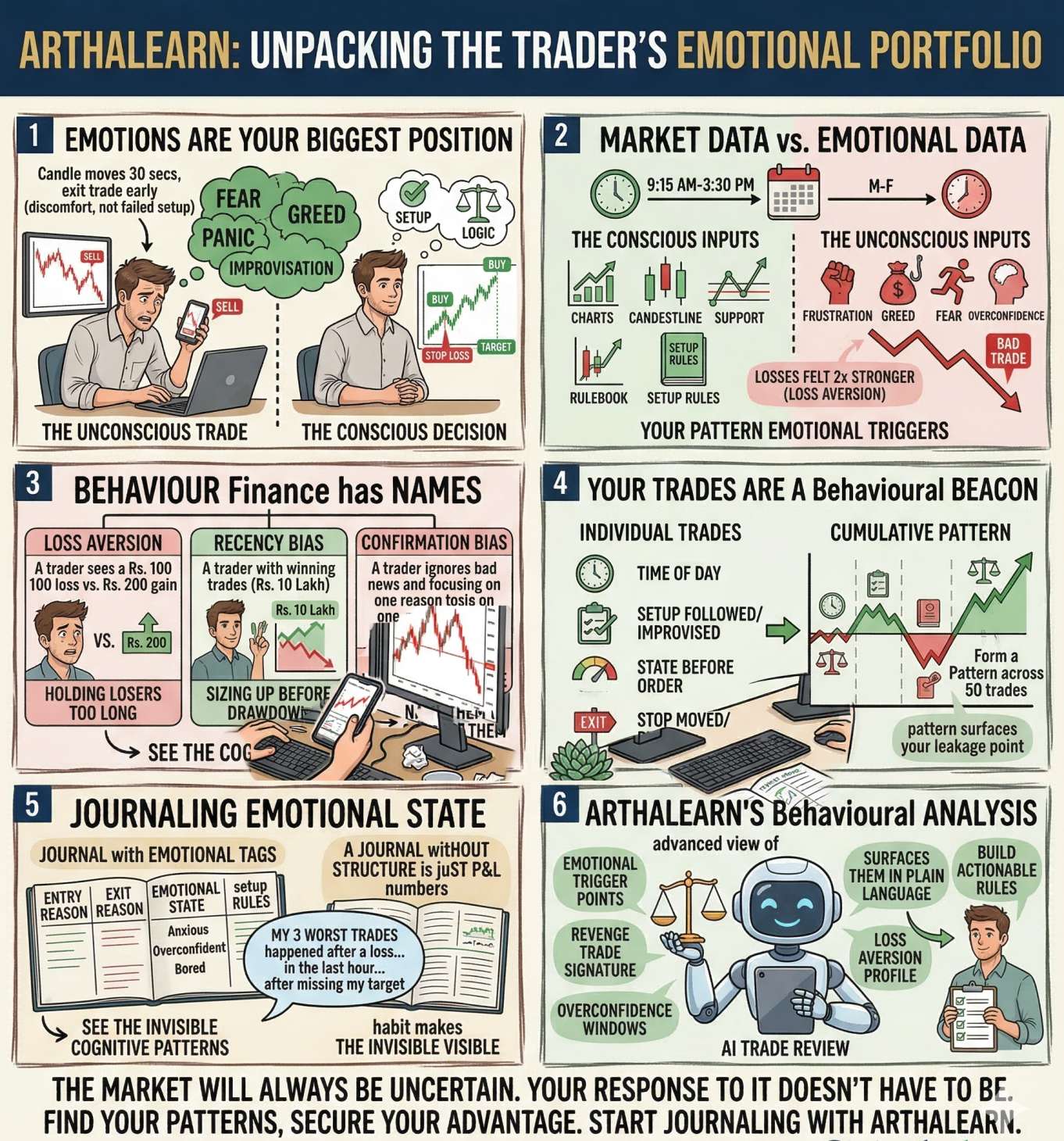
You can have the best setup in the world. Perfect entry, clean chart, well-defined stop loss. And then the candle moves against you for thirty seconds and you close the trade early. Not because your setup failed. Because something inside you couldn't sit with the discomfort.
That feeling, the one that made you exit, was a position. It had size. It had impact. And unlike your actual trade, you never consciously entered it.
The market does not care about your logic
Most traders spend their time building technical knowledge. They study candlestick patterns, learn indicators, read about support and resistance. That knowledge matters. But it only works when your emotional state allows you to apply it.
Fear makes you exit winning trades before they run. Greed makes you hold losing trades past every rational stop. Overconfidence after a good week makes you size up right before your worst trade of the month. Frustration after a loss makes you re-enter immediately, chasing back what the market just took.
None of these decisions are made with your trading brain. They are made with the part of you that is wired for survival, not probability.
The behaviours have names
Behavioural finance has been studying this for decades. Loss aversion, the tendency to feel losses roughly twice as strongly as equivalent gains, explains why traders hold losers too long. Recency bias explains why a string of winning trades makes you feel invincible right before a drawdown. Confirmation bias explains why you find reasons to stay in a trade that has already broken your original thesis.
These are not character flaws. They are cognitive patterns that every human being carries. The difference between a trader who manages them and one who doesn't is awareness. You cannot correct something you haven't named.
What your trades are actually recording
Every trade you take is a data point. But it is not just a market data point. It is a behavioural data point. The time of day you entered. Whether you followed your setup rules or improvised. Your emotional state before you placed the order. Whether you exited at your planned level or moved the stop.
Taken individually these details seem minor. Across fifty trades they form a pattern. And that pattern tells you more about why your P&L looks the way it does than any indicator ever will.
The habit that changes everything
Journaling your emotional state alongside your technical decisions is one of the highest leverage habits a retail trader can build. Not because it makes you feel better about bad trades. Because it makes the invisible visible.
When you can see that your three worst trades of the month all happened when you were trading after a loss, in the last hour of the session, having already missed your daily target, you have something actionable. You have a rule to build.
How ArthaLearn approaches this
ArthaLearn's behavioural analysis tools are built on exactly this principle. Every trade you log is reviewed not just for technical quality but for behavioural patterns. The AI trade review identifies your emotional trigger points, your revenge trade signature, your overconfidence windows, and surfaces them in plain language so you can act on them.
The market will always be uncertain. Your response to it doesn't have to be.
Enjoyed this article?
ArthaLearn is more than articles. Log your trades, get AI-powered analysis, and track your improvement over time — built for Indian traders.
Free forever for trade logging. AI features start at ₹599/month.