Why 9 in 10 F&O Traders Lose Money (And What the Other 10% Do Differently)
SEBI data shows 89% of retail F&O traders lose money every year. Here is what the losing majority have in common and what the profitable 10% do differently.

The 10% who survive F&O trading are not smarter — they have better systems, stricter risk management, and the discipline to follow their own rules.
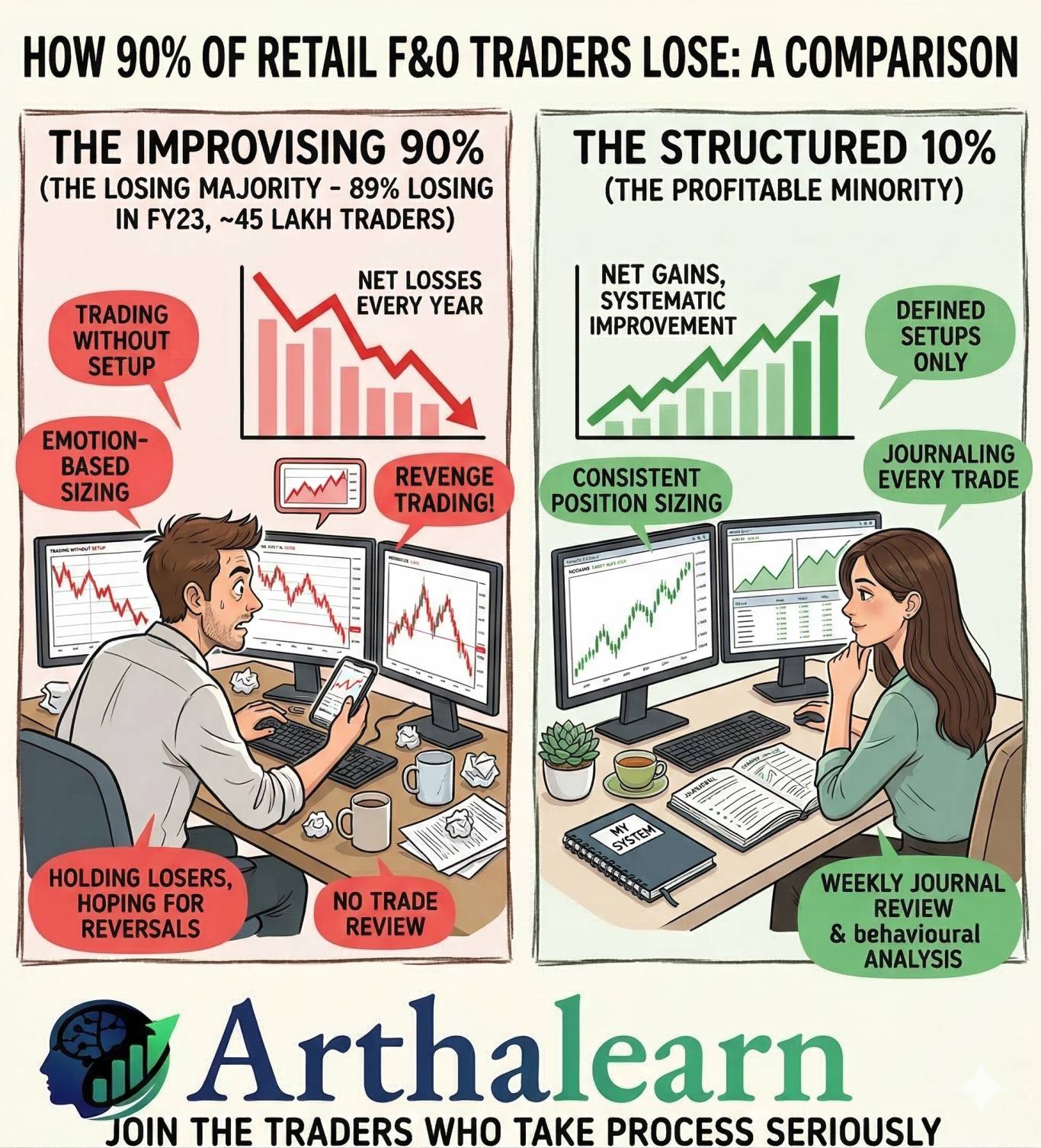
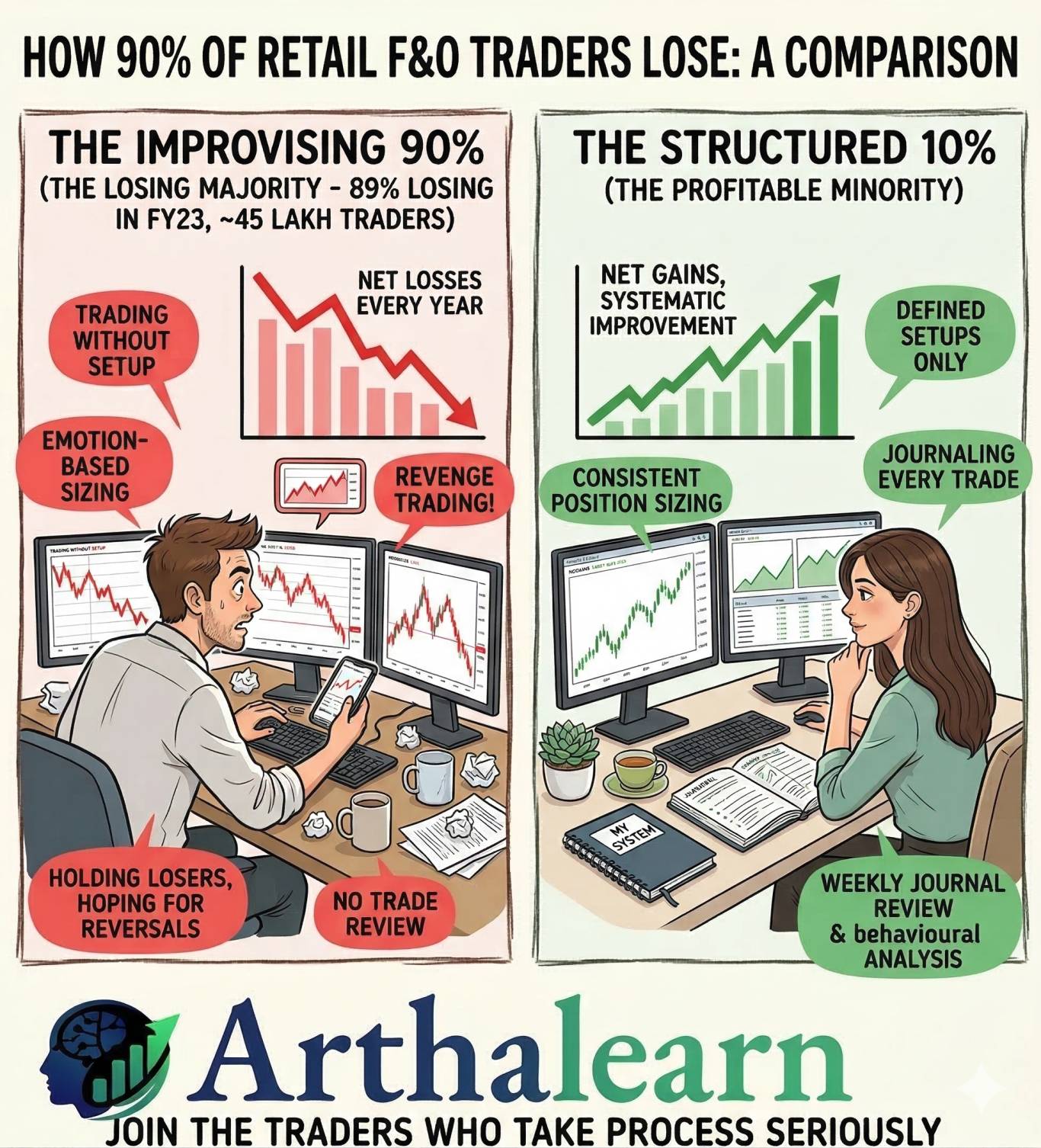
Every year SEBI publishes a report that should stop every retail trader in their tracks. In FY23, 89% of individual F&O traders lost money. Not a bad month. Not a rough quarter. A full financial year of net losses, across nearly 45 lakh unique traders on Indian exchanges.
Most people read that stat, feel briefly uncomfortable, and go back to their positions. This post is for the ones who want to understand what it actually means.
The number is not random
That 89% is not bad luck distributed evenly across the population. It is the predictable outcome of a specific set of behaviours that most retail traders share without knowing it.
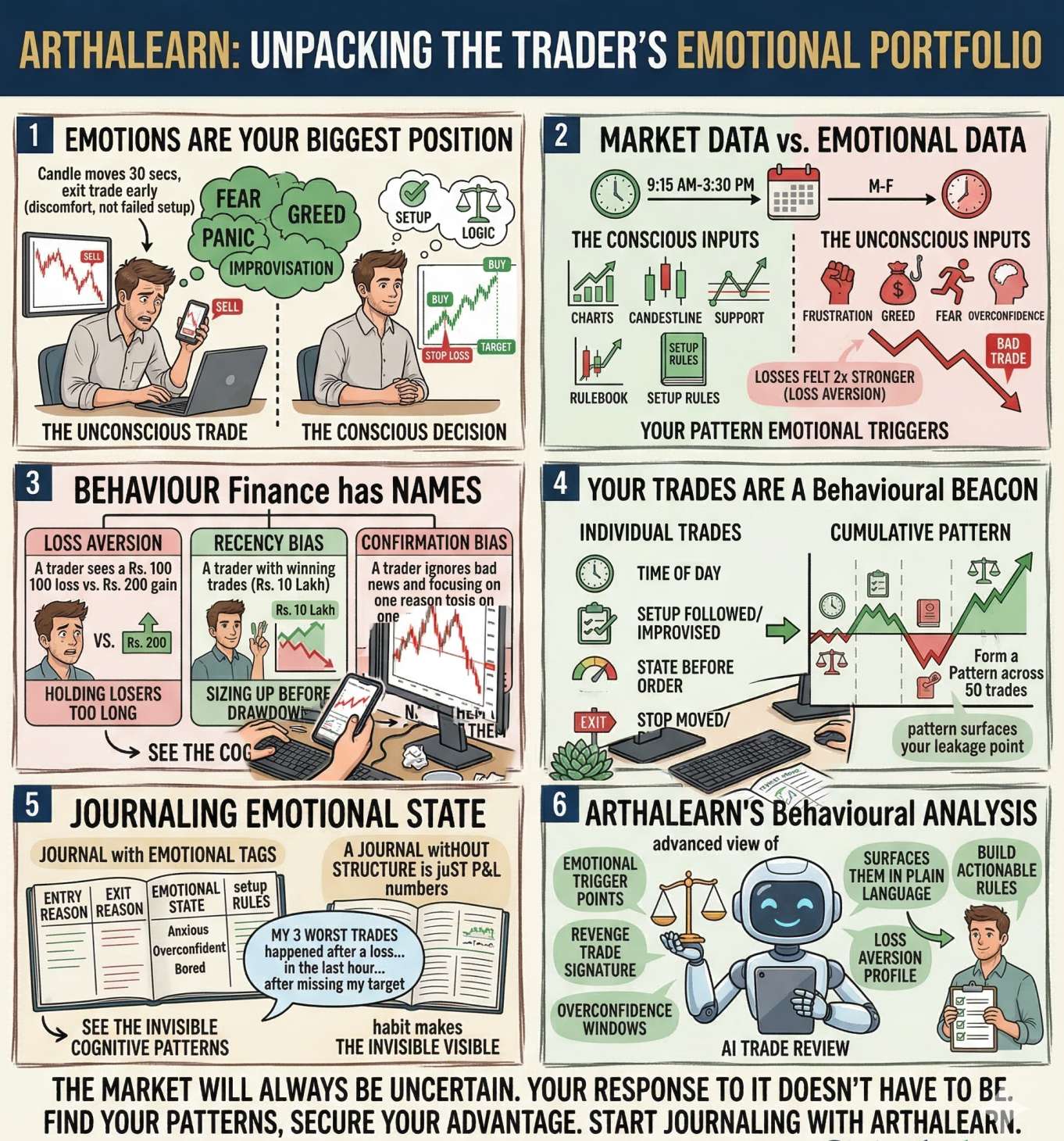
They trade without a defined setup. They size positions based on how confident they feel rather than how much risk they can absorb. They revenge trade after losses. They hold losers hoping for reversals. They overtrade on days when the market gives them nothing clean to work with. And almost none of them review their trades in any structured way.
Each of these behaviours on its own would cost you money. Together they are a reliable system for losing it.
What the profitable 10% actually do
The traders who sit on the right side of that SEBI stat are not necessarily smarter. They don't have better charts or faster internet. What they have is structure.
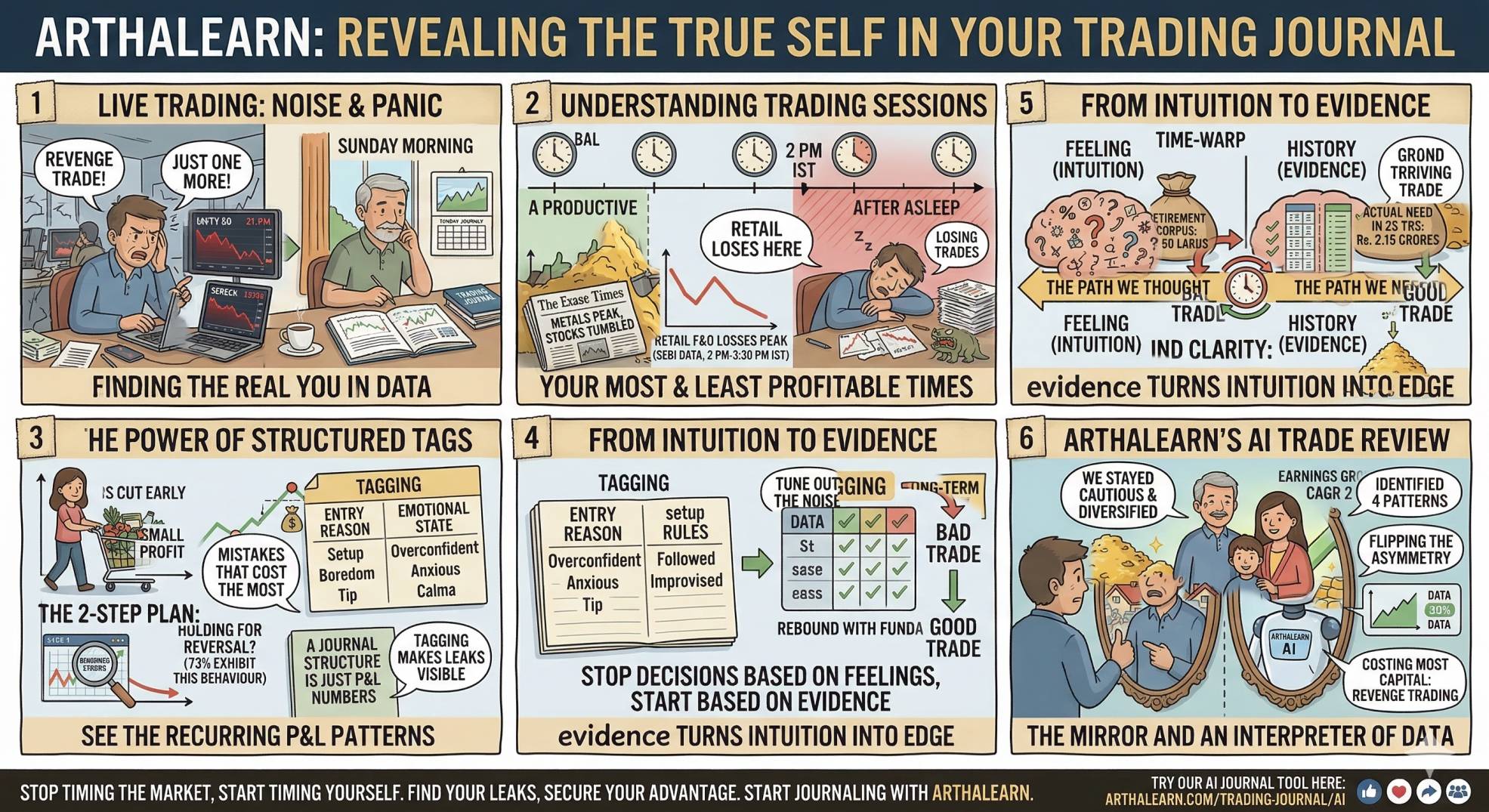
They trade defined setups, the same patterns, the same conditions, repeatedly until they understand the edge and the failure modes inside out. They keep position sizes consistent so that one bad trade cannot undo a week of good ones. They journal every trade, not to record the outcome but to study the decision. And they review that journal regularly, looking for the leak, not just celebrating the wins.
Discipline is not a personality trait in this context. It is a system. The profitable minority have a system. The losing majority are improvising.
The role of knowledge
There is also a knowledge gap that the P&L numbers do not show directly. Most retail traders enter F&O without a real understanding of how options are priced, how time decay works against buyers, or how to read open interest alongside price action. They are trading instruments they do not fully understand, against participants who do.
This is not an indictment. It is a starting point. Every profitable trader started from the same place. The difference is whether they chose to close that gap before deploying serious capital or after losing it.
Why ArthaLearn exists
ArthaLearn was built for the trader who has seen that SEBI stat and decided to do something about it. The platform combines structured learning from SEBI registered research analysts, a trading journal with AI trade review, a portfolio tracker, and behavioural analysis tools that help you identify the specific patterns pulling your P&L down.
The goal is not to make trading easy. It is to make improvement systematic.
The 10% are not a different breed. They just took the process seriously before the market forced them to.
Enjoyed this article?
ArthaLearn is more than articles. Log your trades, get AI-powered analysis, and track your improvement over time — built for Indian traders.
Free forever for trade logging. AI features start at ₹599/month.