What Your Trading Journal Is Actually Telling You
Most traders log trades and move on. Here's what your journal is actually trying to tell you about your habits, your leaks, and your edge.

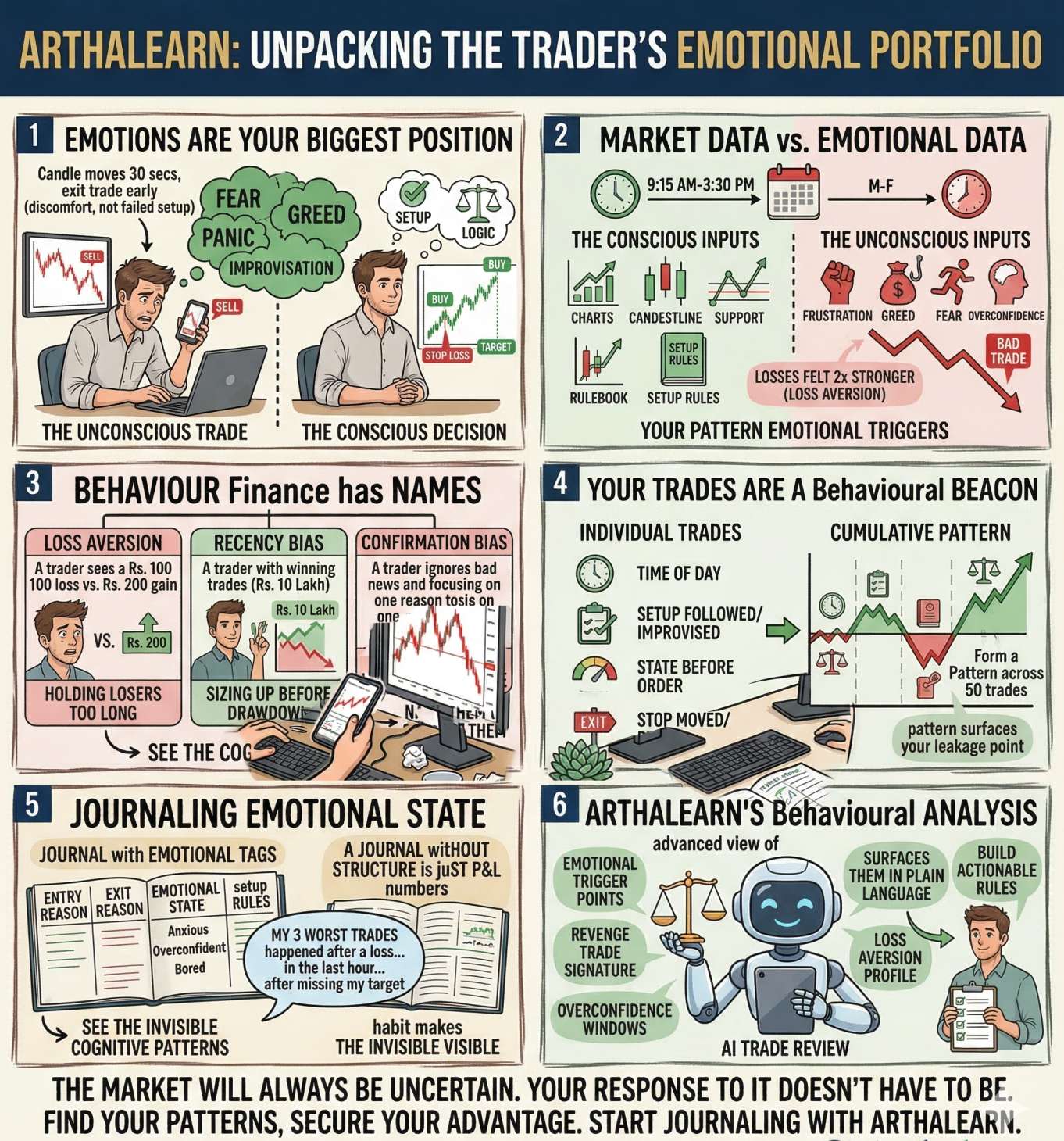
Your trading journal is a mirror. It shows you the patterns you cannot see in real-time — the revenge trades, the FOMO entries, the discipline violations that silently drain your capital.
Most traders open a journal, log a few trades, and close it. They think journaling is recordkeeping. It isn't. It's a mirror.
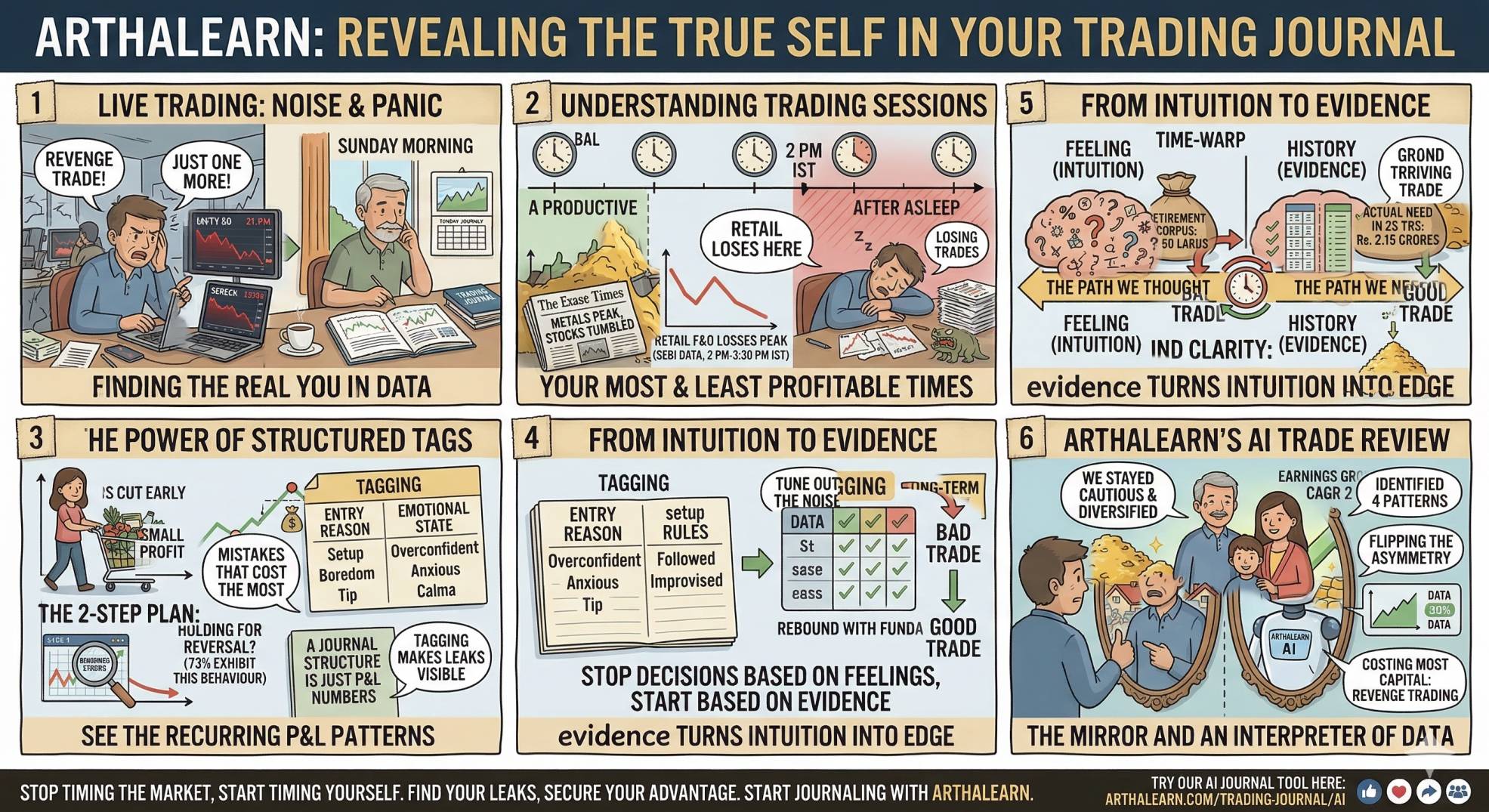
A trading journal reveals patterns you cannot see while you're in a position. When you're staring at a candle, adrenaline is running the show. Your brain is solving for survival, not analysis. When you review ten weeks of logged trades on a quiet Sunday morning, something else shows up. The real you.
The patterns that surface
Your journal will show you which sessions you trade best in. Most retail traders lose money after 2 PM. Volatility drops, spreads widen, and boredom starts making decisions. They don't know this because they never looked. A journal makes it undeniable.
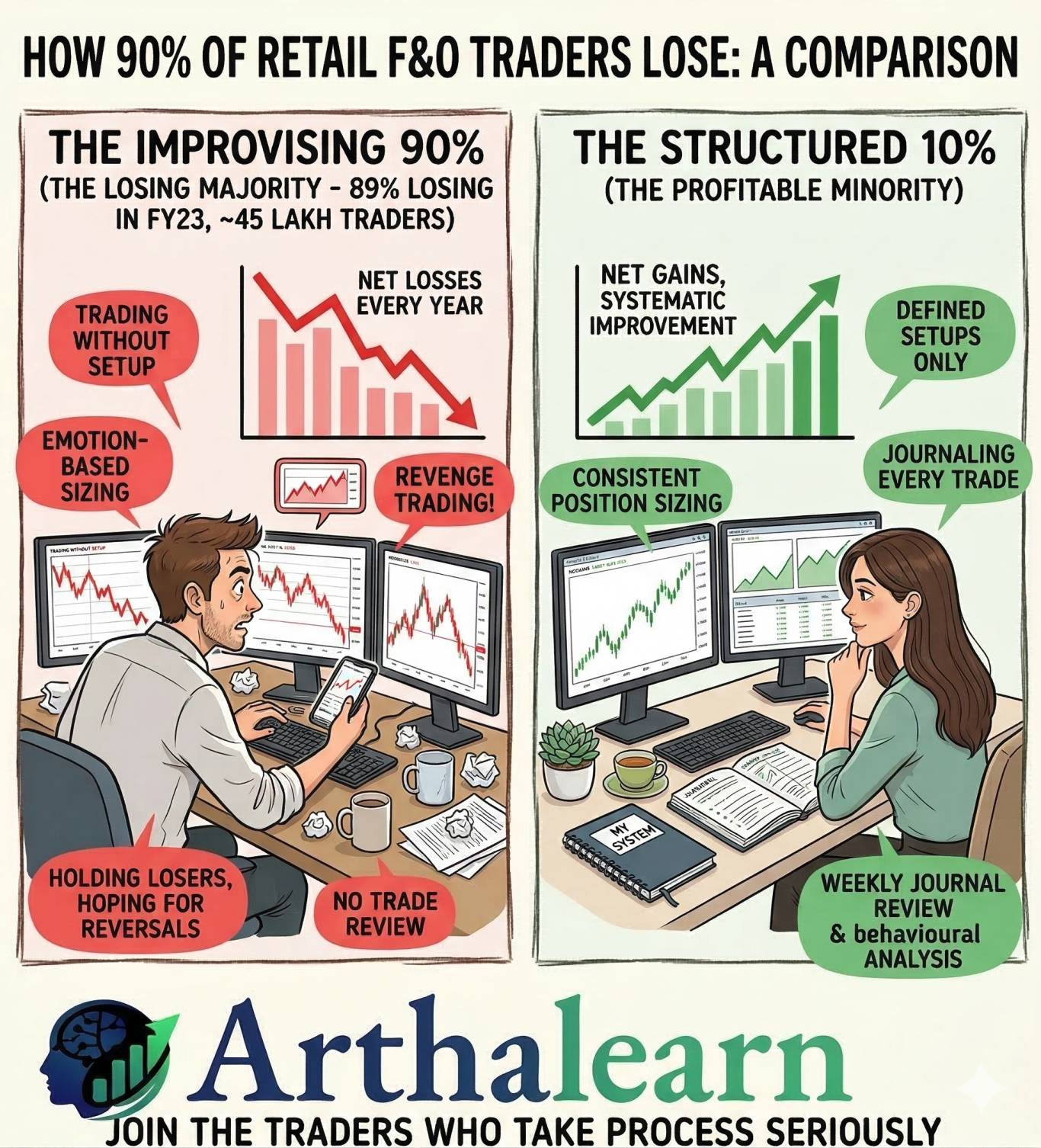
It shows you your revenge trade signature. There's almost always one. A string of rapid entries following a stop loss, each slightly larger than the last, each justified with a fresh reason. On the chart it looks like bad luck. In a journal it looks like a habit you've been repeating for months without realising it.
It shows you your hold time asymmetry. Most traders cut winners too early and hold losers too long, waiting for a reversal that rarely comes. 73% of retail F&O traders exhibit this exact behaviour, according to SEBI data. The journal doesn't judge you for it. It just shows you the number, and the number is hard to ignore.
It also shows you your best trades. The setups where your read was clean, your sizing was right, and you followed your plan without flinching. Those are worth studying just as much as the losses. Most traders skip this part. Understanding what you did right is how you do it again deliberately, instead of accidentally.
The tags that make it useful
A journal without structure is just a list of P&L numbers. What makes it powerful is tagging. Entry reason, exit reason, emotional state before the trade, whether you followed your setup rules or improvised. These tags turn raw data into a pattern engine.
After 30 tagged trades you start seeing things. Certain entry reasons consistently produce losses. Certain emotional states, restless, overconfident, anxious after a gap down open, show up right before your worst trades. You can't fix what you can't see. Tagging makes it visible.
Why this changes everything
Knowing your edge is not enough. You also need to know your leak. Most traders have both but only pay attention to one. The journal surfaces both.
When you build evidence over weeks and months, you stop making decisions based on how you feel today. You make them based on what your own history has proven. That shift, from intuition to evidence, is what separates traders who improve from traders who just accumulate losses and experience without connecting the two.
The ArthaLearn difference
On ArthaLearn, your journal doesn't just store trades. The AI trade review reads across your entire history, identifies recurring patterns, and flags the specific behaviours costing you the most capital. You get the mirror and someone to interpret what's in it.
Your journal is data. Start treating it like one.
Enjoyed this article?
ArthaLearn is more than articles. Log your trades, get AI-powered analysis, and track your improvement over time — built for Indian traders.
Free forever for trade logging. AI features start at ₹599/month.