The Hard Truth About Success in Markets and Business: No Shortcuts, Just Systems and Discipline
Discover the unfiltered reality: true success in trading, investing, and business demands rigorous systems, proven processes, and unwavering discipline. Zero shortcuts exist for lasting wins. Learn from icons like Buffett and Dalio on building your edge, mastering risk, and turning grit into gains in a hype-filled world.

There are no shortcuts in markets or business. The winners build systems, follow processes, and show up consistently when everyone else quits.
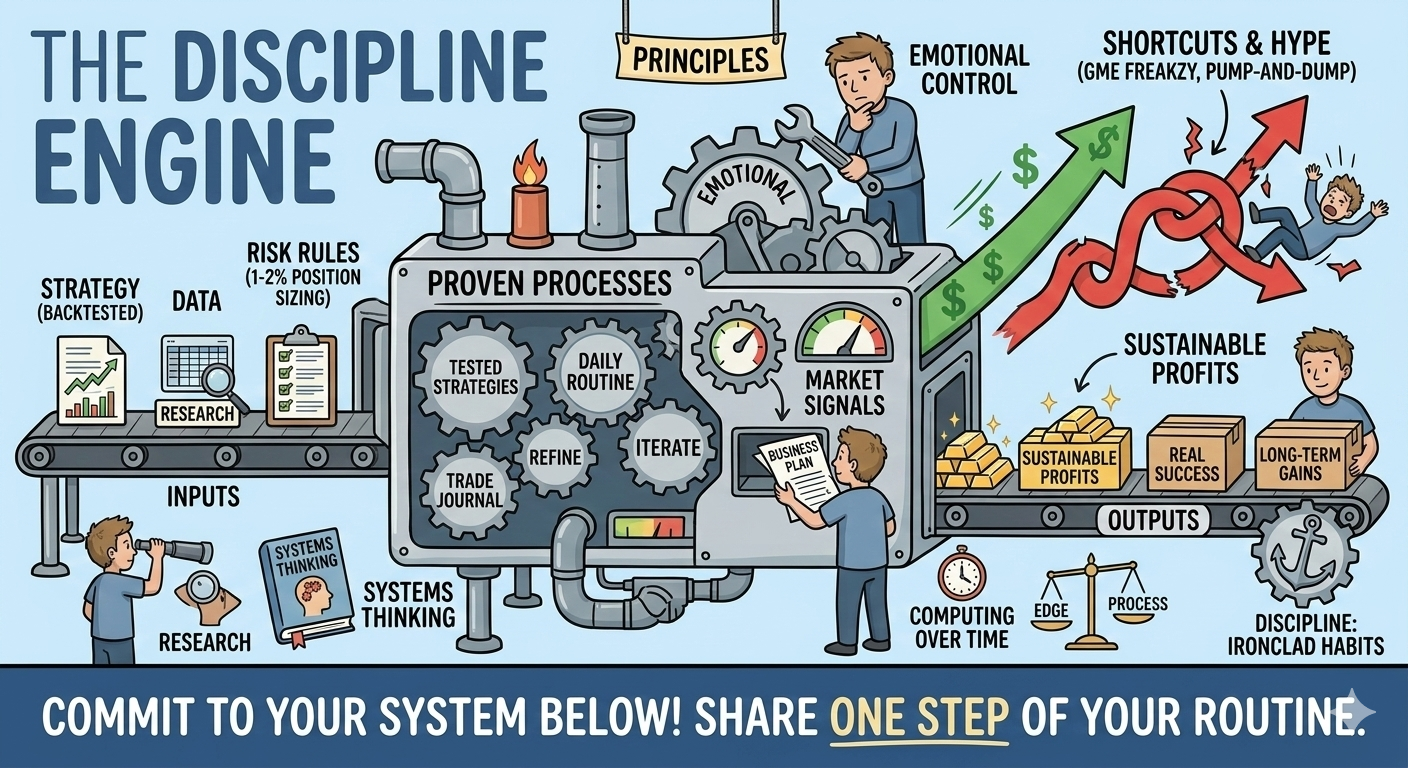
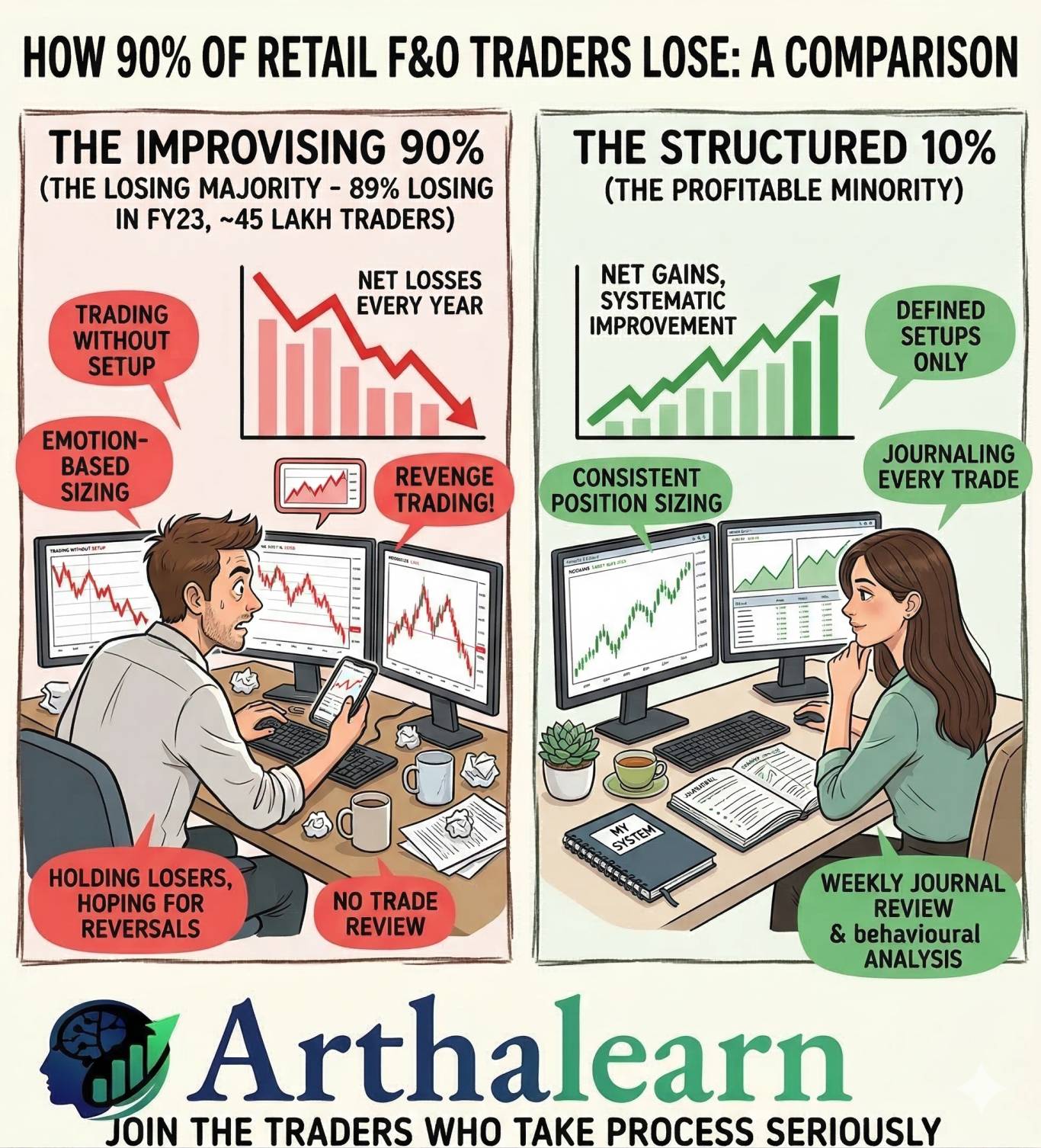
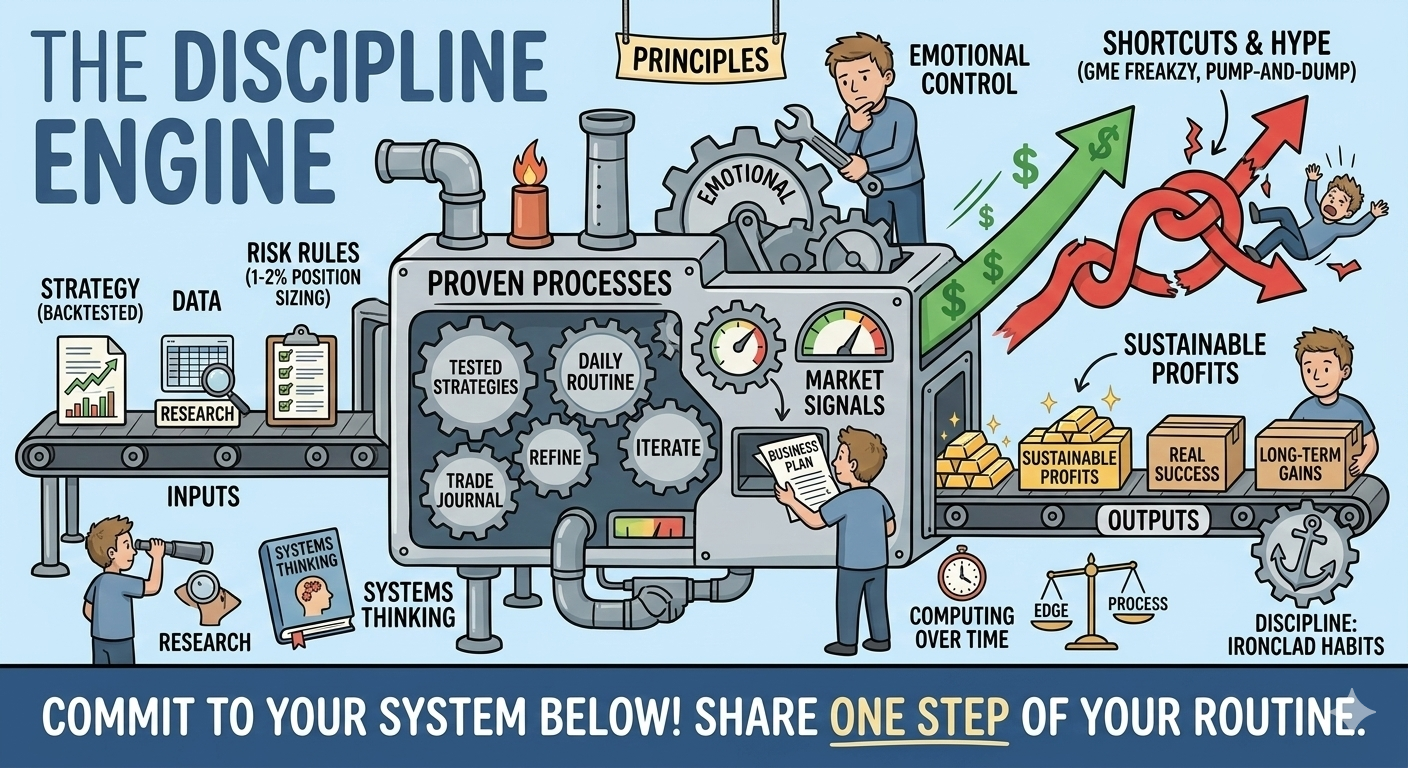
In a world obsessed with overnight success stories, viral hacks, and "get-rich-quick" schemes, it's easy to get swept up in the hype. Social media feeds are flooded with tales of crypto millionaires, day-trading wizards, and entrepreneurs who seemingly struck gold with minimal effort. But let's cut through the noise: there are literally zero shortcuts to real, sustainable success in trading, investing, or any business venture. No proven investor or trader has ever achieved lasting results the easy way. Success isn't about luck or timing—it's about building concrete systems, following proven processes, and maintaining ironclad discipline.
This isn't just motivational fluff; it's a harsh reality check for anyone aiming to be a conscious participant in the markets and end up on the profitable side. Whether you're dipping your toes into stock trading, scaling a startup, or navigating the volatile world of cryptocurrencies, the principles remain the same. Let's dive into why shortcuts are a myth and how you can build a foundation that actually works.
The Allure and Illusion of Quick Wins
Markets thrive on excitement. Remember the 2021 GameStop frenzy? Retail traders piled in, driven by memes and FOMO (fear of missing out), turning a struggling retailer into a rocket ship stock. For a brief moment, it felt like anyone could win big. But the aftermath? Most latecomers got crushed when the bubble burst. This isn't an isolated event—it's a pattern. Meme stocks, pump-and-dump schemes in crypto, or high-leverage options plays promise explosive returns but deliver mostly pain.
Why do these "shortcuts" fail? They're based on speculation, not strategy. They ignore the fundamentals of risk and probability. In contrast, true success stories are built on deliberate, repeatable frameworks. Take Warren Buffett, the Oracle of Omaha. He didn't amass his fortune through flashy trades. His approach at Berkshire Hathaway is straightforward: identify undervalued companies with durable competitive advantages (or "moats") and hold them long-term. But the real secret? Discipline. Buffett spends hours daily reading financial reports, ignoring market swings, and sticking to his circle of competence. It's boring, but it compounds into billions.
Similarly, Ray Dalio, founder of Bridgewater Associates—the world's largest hedge fund—credits his success to "principles." In his book Principles, he outlines creating algorithmic decision-making systems based on data, backtesting, and radical transparency. Failures aren't setbacks; they're data points for refinement. Paul Tudor Jones, the macro trader who foresaw the 1987 Black Monday crash, relies on rigorous risk management and journaling every trade to evolve his methods over decades.
These icons didn't chase the "next big thing." They built systems that withstand market cycles. And this extends beyond finance: Elon Musk's ventures like SpaceX and Tesla succeed through iterative engineering, relentless work ethic, and adaptive processes—not whims or shortcuts.
Why Systems and Discipline Trump Everything
Success in any field boils down to three pillars: edge, process, and discipline.
Define Your Edge: What unique advantage do you have? In trading, it could be a quantitative model spotting inefficiencies. In investing, it's deep fundamental analysis. In business, it's a proprietary process or niche expertise. The key? Test it rigorously. Use historical data to backtest strategies before committing real capital. Tools like TradingView for charting or Excel for simulations can help validate your ideas.
Process Over Outcome: Focus on the inputs, not just the results. Track every decision—wins, losses, and the emotions behind them. Maintain a trading journal or business log to identify patterns and iterate. Automate where possible: set rules for position sizing (e.g., risk no more than 1-2% of your portfolio per trade) to eliminate impulse decisions.
Discipline as a Muscle: This is the hardest part. Markets and businesses are full of temptations—hype cycles, peer pressure, or the urge to deviate from your plan during volatility. Build discipline like a habit: start small, stay consistent, and learn from setbacks. Resources like Edwin Lefèvre's Reminiscences of a Stock Operator offer timeless lessons on the psychology of markets.
The beauty of this approach? While others burn out chasing trends, you're quietly compounding gains. Boredom becomes your superpower in a distracted world.
Embracing the Hard Reality for Long-Term Wins
If you're tired of the rollercoaster and ready to play the long game, start today. Ditch the shortcuts and commit to building your system. Communities like ArthaLearn can help demystify these concepts, offering evidence-based strategies without the hype.
Remember, success isn't glamorous—it's gritty. But those who embrace the process emerge as winners. In the words of Buffett: "The stock market is a device for transferring money from the impatient to the patient." The same holds for business. Are you ready to be patient and disciplined?
Enjoyed this article?
ArthaLearn is more than articles. Log your trades, get AI-powered analysis, and track your improvement over time — built for Indian traders.
Free forever for trade logging. AI features start at ₹599/month.