Navigating the Turbulent Waters of the Indian Stock Market: A Time for Caution and Opportunity
Amid the frustrations of the Indian stock market's recent struggles, this post explores warning signs like gold's surge and offers practical advice: stay cautious, invest staggered if entering, and hold quality stocks patiently for long-term growth.

Market turbulence creates opportunity for those with cash and conviction. Caution and opportunity are not opposites — they are partners.
The Indian stock market has been a battlefield over the last couple of years, testing the resolve of investors from all walks of life. Frustration, fear, and outright panic have become common sentiments among participants—whether you're a seasoned trader or a newcomer dipping your toes in. The Nifty 50 and Sensex have faced relentless headwinds, with sideways trading, sharp corrections, and underwhelming returns compared to global peers. As someone who's been watching these trends closely, I want to share my thoughts on what's happening, why it's hurting so much, and most importantly, what we can do about it.
The Recent Struggles: A Quick Recap
Since late 2024, the market has been in a tough spot. The Sensex peaked at around 86,159 in December 2025 but has since tumbled, closing at 74,564 as of today—a drop of over 10% in the past month alone. The Nifty 50 tells a similar story, sitting at 23,151 after a 2% decline in the latest session. Year-over-year gains are meager, with the index up just 0.53%, lagging behind emerging markets and even underperforming in 2025 with only an 8.5% return through November.
What's fueling this? Geopolitical tensions, such as the ongoing US-Israel-Iran conflicts driving up oil prices, massive foreign investor outflows ($49 billion this month), US tariffs denting export sentiment, and rising inflation (3.21% in February) are all culprits. Add to that a slowdown in corporate earnings growth and a depreciating rupee (down 8% since September 2024), and it's clear why the pain feels so acute. Many mid- and small-cap stocks have declined despite headline index stability, leading to a "valuation reset" after 15 months of choppy action.
Here's a look at the Nifty 50's performance over recent years to visualize the consolidation and bull runs:
The Warning Signs We Saw Coming: Gold and Silver's Surge
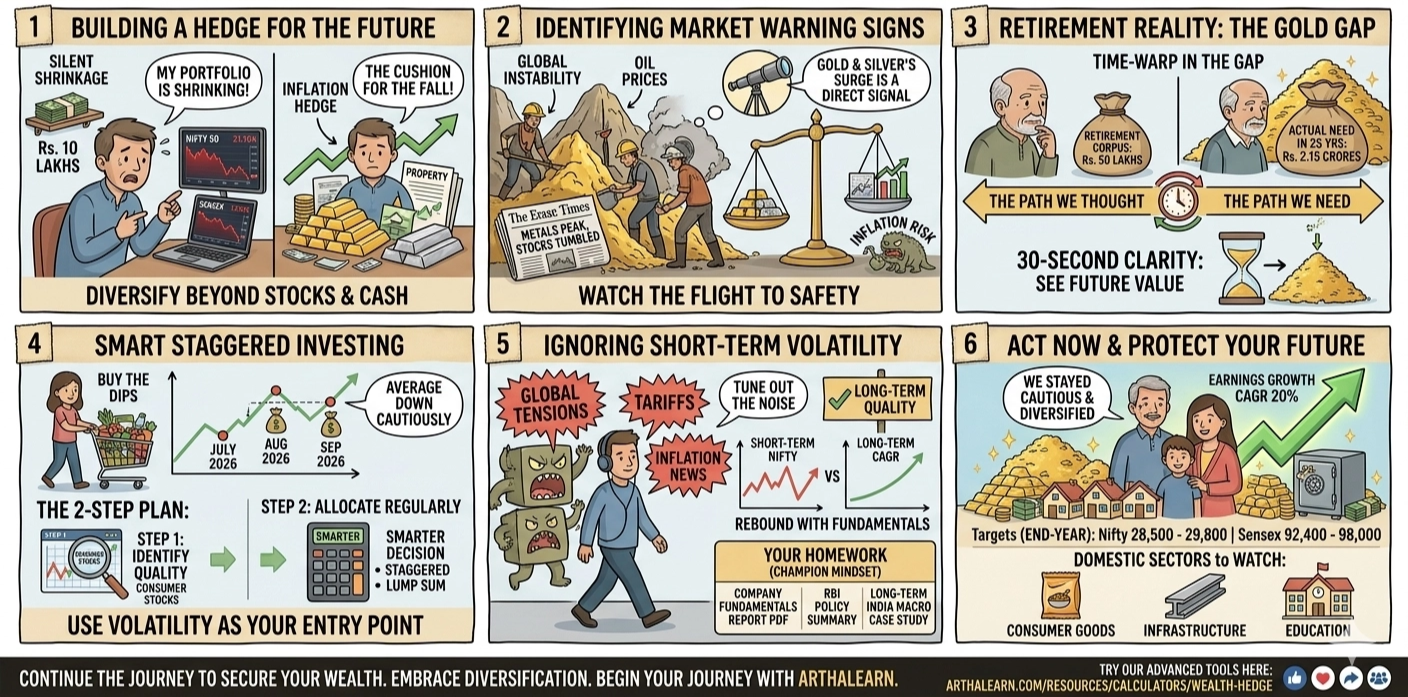
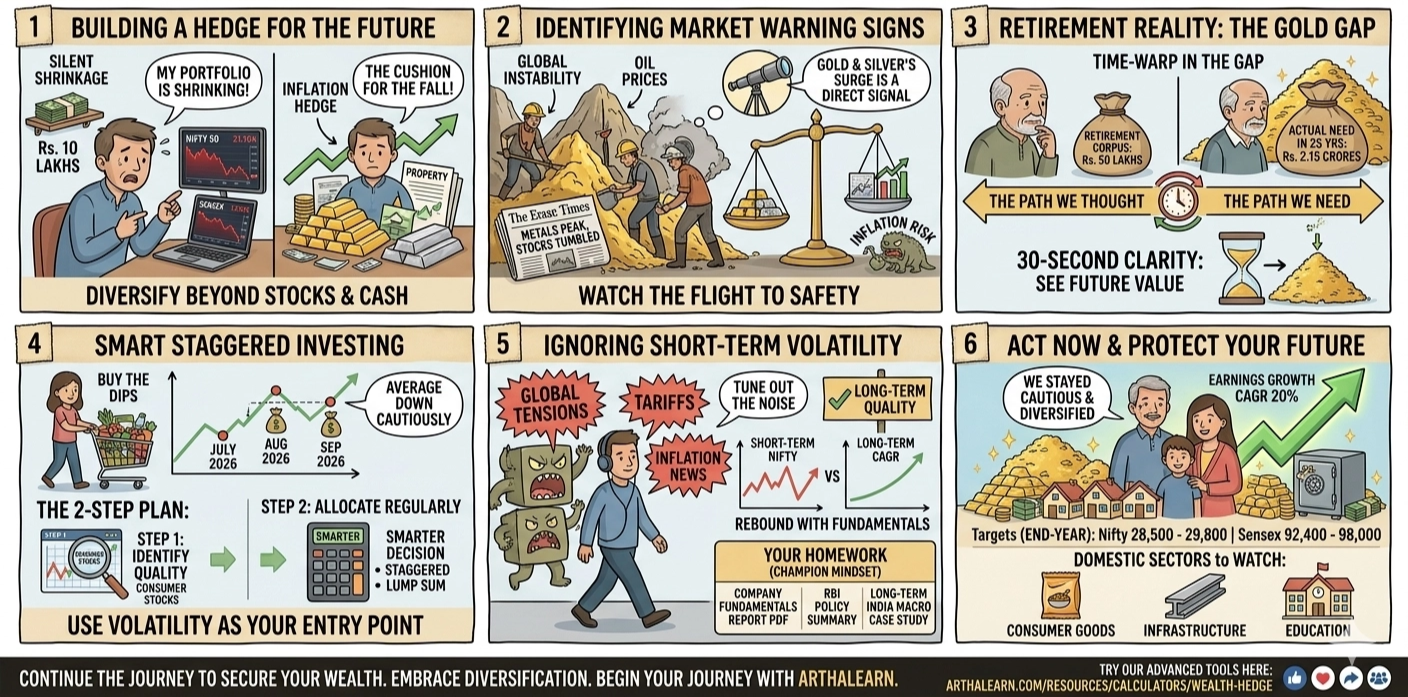
Back in December 2025, when gold and silver were skyrocketing, I posted about how this wasn't a sign of prosperity but a dire warning. Prices were rising like there was no tomorrow These moves were driven by central bank buying, tariff fears, industrial demand, and a flight to safety amid economic jitters.
In hindsight, it was spot on: precious metals often signal deeper cracks in the economy, like inflation risks, currency weakness, or structural breakdowns. The frustration we're feeling now? It's real and justified. But recognizing these signals early can help us prepare rather than react in panic.
What Can We Do in Times Like These?
The market's volatility can be overwhelming, but here's the good news: history shows that these phases often precede stronger cycles. The key is to stay grounded. Here's my advice, honed from observing these trends:
Stay Cautious and Patient: Don't let daily news headlines dictate your moves. Geopolitical flares, rate cut speculations, or tariff talks create noise, but focusing on fundamentals is crucial. Analysts predict a range-bound market short-term, but a potential rally in the second half of 2026, with earnings growth at 13-16% and policy supports like RBI rate cuts or GST tweaks.
Ignore the Volatility: Tune out the short-term swings. If you're tempted to sell in fear, remember that quality investments rebound with the economy. India's macro story is still strong—poised to become the world's third-largest economy by 2027, with domestic flows from mutual funds and retail investors cushioning foreign exits.
For Those Looking to Invest: This could be your entry point, but approach it smartly. Use a staggered, calculated strategy—like dollar-cost averaging over months—to buy the dips. Valuations have cooled, setting up for upside. Targets suggest Nifty could hit 28,500-29,800 by year-end, and Sensex up to 92,400-98,000. Focus on domestic sectors like consumer goods and infrastructure, which might weather export challenges better.
For Those Already Invested: If your holdings are in solid companies with strong balance sheets and growth potential, hold tight. Growth will follow fundamentals—earnings could compound at 20% annually over the next five years. The right moments to average down will appear; no need to rush.
One extra tip: Consider a light hedge with assets like gold if inflation or global risks linger, but keep your portfolio balanced. It's not about timing the market perfectly but staying in the game.
Final Thoughts: Hang In There
The pain is immense right now, but it's also a test of patience that often rewards the steadfast. India's market has weathered storms before and emerged stronger. By staying cautious, ignoring the noise, and investing thoughtfully, we can turn this challenging period into an opportunity. What are your thoughts? Have you adjusted your strategy lately? Share in the comments—let's discuss and support each other through this.
If you're in our group, feel free to repost or debate. Remember, this isn't financial advice—always do your due diligence or consult a professional.
Stay invested, stay informed.
Enjoyed this article?
ArthaLearn is more than articles. Log your trades, get AI-powered analysis, and track your improvement over time — built for Indian traders.
Free forever for trade logging. AI features start at ₹599/month.